Enhancing Visual Appeal with a Floral Watercolor Border
In the realm of graphic design and digital artistry, the boundary between content and decoration is often where the most impactful storytelling occurs. A floral watercolor border serves as more than just a decorative frame; it acts as a visual anchor that guides the viewer’s eye toward the central message while establishing an immediate emotional tone. This specific design aesthetic, characterized by soft, hand-painted textures and organic forms, has transcended fleeting trends to become a staple in professional and personal creative projects alike.
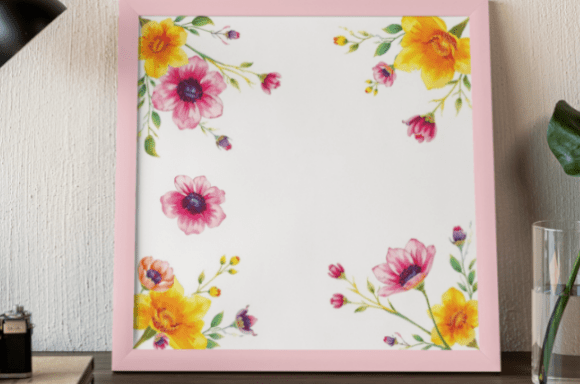
The appeal of this style lies in its inherent duality. It is simultaneously elegant and approachable, structured yet free-flowing. When designers incorporate a beautiful watercolor floral border design featuring vibrant yellow and pink flowers with green leaves, they are leveraging color psychology and artistic tradition to create a sense of warmth and freshness. The delicate arrangement in the corners ensures that the artwork enhances rather than overwhelms the composition, leaving the center open for personalized text or critical design elements. This balance is crucial for maintaining readability and visual hierarchy in any layout.
The Artistic Mechanics of Watercolor Design
Understanding why a watercolor style resonates so deeply with audiences requires a look at the medium itself. Unlike vector graphics or sharp digital illustrations, watercolor is defined by its unpredictability and fluidity. The pigments bleed slightly into the paper, creating soft edges and subtle gradients that mimic the imperfections of nature. When this aesthetic is replicated digitally for a floral watercolor border, it retains those human touches that make the design feel authentic and handcrafted.
The specific combination of vibrant yellow and pink flowers against a backdrop of green leaves is not arbitrary. Yellow is universally associated with optimism, energy, and clarity, while pink evokes feelings of compassion, nurturing, and romance. Green acts as a stabilizing neutral, grounding the brighter hues and providing a natural context. This triad of colors creates a harmonious palette that is visually stimulating without being aggressive. The soft hand-painted style further softens the impact, ensuring that the border feels like an invitation rather than a barrier.
For creators, mastering the placement of these elements is key. By arranging the flowers delicately in the corners, the design utilizes negative space effectively. This technique, known as framing, draws the viewer’s focus inward. It is a subtle psychological cue that tells the audience, "Look here," directing attention to the blank center where the primary information resides. This makes the floral watercolor border an exceptionally functional tool for communication, not just decoration.
Practical Applications Across Industries
The versatility of this design element allows it to be deployed across a wide spectrum of industries and use cases. Its ability to convey elegance and freshness makes it particularly suitable for events and communications that require a personal touch.
Wedding and Event Invitations
Perhaps the most common application is in the wedding industry. Couples seeking a romantic, organic, or garden-party theme often turn to watercolor florals to set the tone for their special day. A beautiful watercolor floral border design on an invitation suite suggests a celebration that is both sophisticated and relaxed. The vibrant yellow and pink hues can be customized to match the wedding’s color palette, while the green leaves provide a timeless, natural backdrop. Because the center is left blank, designers can easily overlay elegant typography, monograms, or essential event details without compromising legibility.
Greeting Cards and Stationery
In the world of paper goods, the floral watercolor border is a perennial favorite. Whether for birthdays, anniversaries, or thank-you notes, the hand-painted look adds a layer of sincerity and care. Consumers often perceive watercolor designs as higher quality and more thoughtful than generic clip-art. For small business owners who sell handmade stationery, offering templates with these borders can significantly enhance the perceived value of their products. The empty center allows for handwritten messages, preserving the personal connection between sender and recipient.
Digital Marketing and Social Media
Beyond print, this aesthetic has found a robust home in digital marketing. Brands in the lifestyle, beauty, wellness, and coaching sectors frequently use watercolor backgrounds to soften their online presence. A post featuring a vibrant yellow and pink floral border can break up the monotony of a social media feed, encouraging users to pause and engage. These borders are ideal for quote graphics, announcement posts, or promotional banners. The blank center provides ample space for short, punchy copy or call-to-action buttons, ensuring that the marketing message remains the focal point.
Design Considerations for Optimal Impact
While the floral watercolor border is inherently attractive, its effectiveness depends on how it is integrated into the overall design. Professionals must consider several factors to ensure the final product is both aesthetically pleasing and functionally sound.
- Contrast and Readability: The most critical consideration is the contrast between the background and the text placed in the center. Since watercolor textures can have varying levels of opacity, it is essential to ensure that the center remains sufficiently light or uniform. If the watercolor bleeds too much into the middle, it may interfere with text legibility. Designers should test their layouts with different font weights and colors to guarantee accessibility.
- Color Harmony: Although the standard design features yellow and pink flowers, successful implementation often requires adjusting the saturation and hue to align with brand guidelines or specific themes. A pastel version might suit a baby shower, while a more saturated, vibrant iteration could work for a summer sale announcement. Understanding color theory allows creators to adapt the green leaves and vibrant flowers to suit diverse contexts.
- Resolution and Format: For print applications like invitations, high-resolution files (300 DPI or higher) are non-negotiable to maintain the crispness of the watercolor texture. For digital use, web-optimized formats such as PNG with transparent backgrounds offer the greatest flexibility, allowing the border to be overlaid on various colored backgrounds without a white box appearing around the edges.
The Psychological Impact of Organic Design
In an increasingly digital and sterile world, there is a growing consumer preference for designs that feel human and organic. The floral watercolor border taps into this desire for authenticity. The irregularities in the brushstrokes and the natural subject matter evoke a sense of calm and well-being. This is particularly relevant for brands and creators who want to position themselves as approachable, eco-friendly, or community-oriented.
Research in environmental psychology suggests that exposure to natural imagery, even in two-dimensional form, can reduce stress and improve mood. By incorporating a beautiful watercolor floral border design into their materials, businesses can subtly influence the emotional state of their audience. The vibrant yellow and pink flowers trigger positive associations, while the green leaves provide a restful visual experience. This emotional resonance can lead to higher engagement rates, increased trust, and a stronger connection between the brand and the consumer.
Implementation Strategies for Creators
For those looking to integrate this design element into their workflow, there are several pathways to explore. Graphic designers may choose to create custom watercolor borders from scratch, using digital brushes that mimic traditional watercolor techniques. This approach offers complete control over the composition and color palette. Alternatively, many creators utilize stock assets or pre-made templates featuring a floral watercolor border. These resources can save time and provide a professional starting point, which can then be customized to fit specific needs.
When using pre-made assets, it is important to license them correctly and ensure they are high quality. Look for designs where the flowers are arranged delicately in the corners and the center is genuinely clear. Some lower-quality assets may have faint textures in the middle that can interfere with text. Testing the asset in your intended layout before finalizing the design is a best practice that prevents costly revisions later.
Furthermore, educators and researchers can use these borders to make academic or instructional materials more engaging. A worksheet or presentation slide framed by soft watercolor florals can appear less intimidating and more inviting to students. This simple design choice can lower barriers to learning and make complex information feel more accessible.
Future Trends in Floral Digital Art
As design trends evolve, the floral watercolor border continues to adapt. We are seeing a move towards more diverse botanical representations, including native wildflowers and succulents, alongside traditional roses and peonies. There is also a growing interest in combining watercolor textures with other mediums, such as gold foil accents or hand-lettered typography, to create mixed-media effects. However, the core principle remains the same: using organic, hand-painted elements to frame and elevate content.
The enduring popularity of this style speaks to its fundamental utility and beauty. Whether used for a wedding invitation, a corporate newsletter, or a social media post, a beautiful watercolor floral border design featuring vibrant yellow and pink flowers with green leaves offers a timeless solution for enhancing visual communication. By understanding its artistic mechanics, practical applications, and psychological impact, creators can leverage this powerful design tool to connect with their audiences in meaningful and memorable ways.