Abstract Seashell Spiral Circle Line Art: A Practical Guide for Modern Design Applications
In the evolving landscape of digital branding and graphic design, the demand for versatile, minimalist assets has never been higher. Among the myriad of options available to designers and business owners, Abstract Seashell Spiral Circle Line Art has emerged as a distinctive choice. This specific style combines organic natural forms with geometric precision, offering a clean and modern aesthetic that resonates with contemporary audiences. Whether you are developing a new brand identity, refining user interface elements, or seeking decorative symbols for web projects, understanding the nuances of this design approach is essential for making informed creative decisions.
Defining the Aesthetic: What Sets It Apart
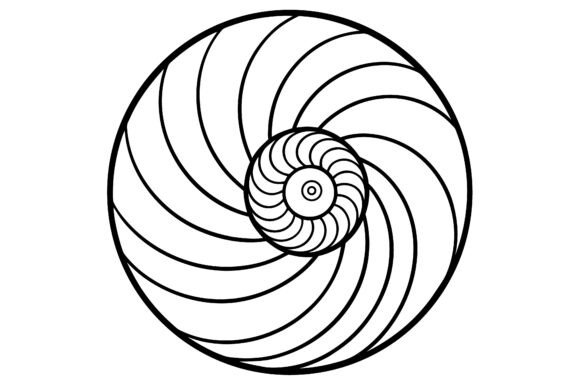
At its core, Abstract Seashell Spiral Circle Line Art is a minimal vector illustration characterized by smooth outlines and abstract shapes. Unlike traditional illustrations that may rely on heavy shading, complex textures, or realistic details, this style embraces a professional flat design philosophy. The "seashell spiral" motif draws inspiration from the Fibonacci sequence and natural logarithmic spirals found in nature, while the "circle line art" component ensures structural balance and harmony.
The distinctiveness of this asset lies in its duality. It is simultaneously organic and mathematical. The spiral suggests growth, evolution, and fluidity, while the circular containment provides a sense of completeness and stability. For branding purposes, this combination can subtly communicate values such as sustainability, continuous improvement, and elegance without relying on overt imagery. The clean lines ensure that the graphic remains legible and impactful across various scales, from large billboard advertisements to small mobile app icons.
Comparing Line Art to Other Design Styles
When evaluating visual assets for a project, it is crucial to understand how Abstract Seashell Spiral Circle Line Art compares to other popular design categories. Each style serves different functional and emotional purposes.
- Line Art vs. Photorealism: Photorealistic images offer immediate context and detail but can feel cluttered or dated in modern UI/UX environments. Line art, by contrast, strips away noise, allowing the viewer to focus on the core concept. It loads faster on websites and scales infinitely without loss of quality, making it superior for responsive web design.
- Minimalist Vector vs. Hand-Drawn Sketches: While hand-drawn sketches convey warmth and authenticity, they often lack the precision required for corporate branding. The smooth outlines of abstract seashell spirals provide a polished, professional look that aligns better with tech startups, wellness brands, and luxury services seeking a contemporary touch.
- Flat Design vs. 3D Renders: Three-dimensional graphics are trending for their depth and interactivity, but they require significant processing power and can distract from content. Flat line art offers a lightweight alternative that maintains clarity and reduces cognitive load for users navigating digital platforms.
Choosing Abstract Seashell Spiral Circle Line Art is often a strategic decision to prioritize clarity and versatility over decorative complexity. It acts as a neutral yet sophisticated backdrop that enhances rather than overwhelms the surrounding content.
Ideal Use Cases and Strategic Fit
Not every project benefits from the same visual language. Identifying when this specific style is the right fit can save time and resources. Here are several scenarios where this asset excels:
Brand Identity and Logos
For businesses in the wellness, beauty, or environmental sectors, the seashell spiral evokes natural connections. When simplified into line art, it becomes a memorable logo mark that is easy to reproduce on business cards, packaging, and merchandise. Its abstract nature allows for broader interpretation, preventing the brand from being pigeonholed into a single literal meaning.
UI/UX Elements and Icons
In user interface design, consistency is key. A clean line art icon set ensures that buttons, loaders, and navigation elements look cohesive. The spiral shape can be adapted for loading animations or progress indicators, leveraging the circular motion to guide the user’s eye. Because the design is minimal, it integrates seamlessly with both light and dark modes without requiring extensive modification.
Web Design and Decorative Assets
Modern websites often use large hero sections with ample white space. Abstract Seashell Spiral Circle Line Art serves as an elegant decorative symbol that fills negative space without creating visual clutter. It can be used as a watermark, a section divider, or a background pattern to add texture and interest to otherwise plain layouts.
Evaluating Limitations and Tradeoffs
While versatile, this design style is not a universal solution. Understanding its limitations helps prevent misapplication. One primary tradeoff is emotional immediacy. Line art is subtle; it does not grab attention with bold colors or dramatic contrasts. If a campaign requires high-energy excitement or urgent calls to action, a more vibrant, illustrative, or photographic approach might be more effective.
Additionally, abstraction can lead to ambiguity. If the audience does not immediately recognize the spiral as a seashell or a related concept, the intended message may be lost. In such cases, pairing the line art with clear typography or supplementary contextual cues is necessary. Furthermore, because minimal designs are popular, there is a risk of appearing generic if the execution lacks unique stylistic tweaks. Customizing the line weight, curvature, or integration with other geometric shapes can help maintain distinctiveness.
Technical Considerations for Implementation
To maximize the value of Abstract Seashell Spiral Circle Line Art, technical execution matters. Since these are vector illustrations, they should always be implemented in scalable formats such as SVG (Scalable Vector Graphics) for web use. This ensures crisp rendering on high-resolution displays and allows for easy color manipulation via CSS. For print materials, exporting as high-quality EPS or PDF files preserves the integrity of the smooth outlines.
Designers should also consider line weight consistency. If using the spiral as part of a larger icon system, ensure that the stroke width matches other elements in the suite. Inconsistent line weights can disrupt visual harmony and make the design appear unprofessional. Moreover, when adapting the asset for different backgrounds, test contrast ratios to ensure accessibility compliance, particularly for users with visual impairments.
Making the Final Decision
Choosing the right visual asset involves balancing aesthetic preference with functional requirements. Abstract Seashell Spiral Circle Line Art is an excellent choice when the goal is to convey elegance, modernity, and natural harmony through a minimalist lens. It is particularly well-suited for brands and projects that value subtlety and scalability.
However, if the project demands high visual impact, detailed storytelling, or a rustic, handmade feel, alternative styles such as watercolor illustrations, bold typography, or photographic imagery may be more appropriate. The key is to align the visual style with the brand’s voice and the user’s expectations. By carefully evaluating the context, audience, and technical constraints, designers and decision-makers can determine whether this clean, modern silhouette design is the optimal solution for their creative needs.
Ultimately, the strength of Abstract Seashell Spiral Circle Line Art lies in its adaptability. It serves as a foundational element that can be expanded, modified, and integrated into diverse creative workflows. Whether used as a standalone logo or a subtle decorative accent, it adds a contemporary touch that enhances the overall professionalism and visual appeal of any design project.